


In the current regional climate -marked by persistent uncertainty related to the Iran‑linked hostilities and wider Middle East tensions- construction and supply contracts, amongst the others, are under pressure. To manage risk properly, parties need a clear, practical understanding of “force majeure” and we will look at it under Saudi law perspective.
Saudi law does not define “force majeure” in a single article. Instead, it appears through Articles 110 and 125 of the Saudi Civil Transactions Law (CTL).
- Article 110 states that if performance becomes impossible due to a reason beyond the debtor’s control, the affected obligation and the corresponding obligation of the other party are extinguished, and the contract may be terminated.
- Article 125 provides that a person is not liable for harm caused by events beyond his control (such as war, natural disaster, or third‑party fault), unless the parties agreed otherwise.
In practice, Saudi courts interpret force majeure narrowly: it applies only to unforeseeable, beyond the debtor's control events that make performance genuinely impossible, not merely more difficult, delayed, or expensive.
Much depends also on how the relevant contractual clause is drafted. If on the one side the Saudi Civil Transactions Law provides that the performance must be impossible, parties might mitigate the impossibility threshold and provide that the performance must be 'reasonably' impossible in line with what the ICC Force Majeure Standard clause provides.
Practical example: Iran‑linked disruption and a Saudi project
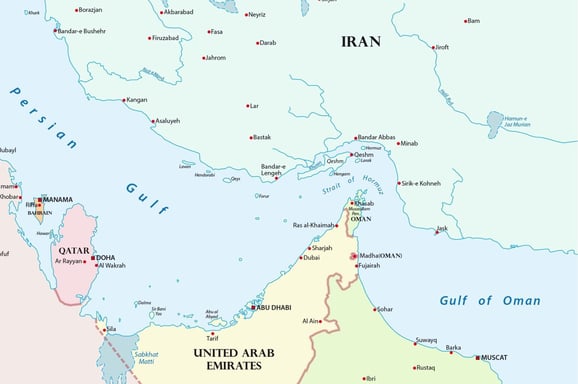
Imagine an infrastructure project in Saudi Arabia where critical heavy‑lift equipment is to be imported from a European supplier, and the maritime route passes through the Strait of Hormuz. Given the current situation of the Strait of Hormuz, if there is no realistic alternative route without adding months of delay, a Saudi court or arbitrator may view this as true impossibility of performance during the affected period, satisfying Article 110 CTL. In that case, the contractor can argue that it is excused from performance during that period and may even seek termination of the affected part of the contract.
By contrast, if the contractor can still get the equipment via an alternative route (e.g., longer routes around the Arabian Peninsula or via air freight), even at much higher cost, the situation is more likely to be treated as hardship, not force majeure.
The hardship, under Saudi Law, gives the affected party the right to re-negotiate the terms and conditions of the contract but neither to suspend the performance nor to terminate the contract.
Tips for contractors
- Focus on whether performance is truly impossible, not just more expensive.
- Keep detailed records of government orders, port‑closure notices, and shipping‑line communications.
- Be ready to show that no realistic alternative exists within a reasonable timeframe.
In the current Iran‑linked environment, this distinction can help parties avoid being treated as in default when the root cause is an external, uncontrollable event.
You can read more on this topic HERE
Read more on the topic.

 +966 53 712 5234